THE BIKABO PRODUCT
Everything Behind Client Work, Connected.
Bikabo is one system with several halves that most businesses buy separately: the work, the people delivering it, the review that decides it is done, the cost it creates, and the money moving on both sides of it.
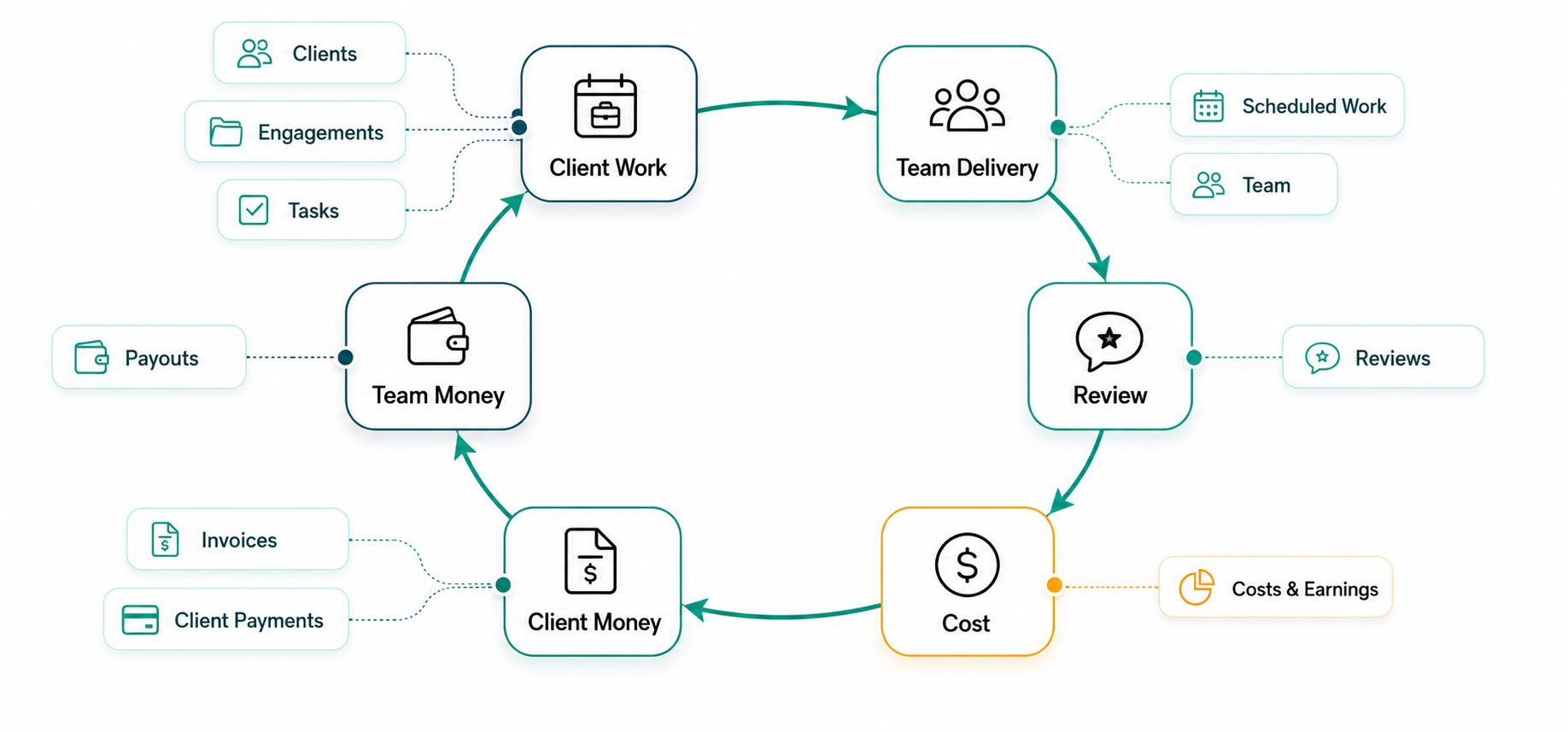
The Model Everything Else Sits On.
Each stage produces the next. That is why the financial picture keeps up with the work without anyone maintaining a second system to make it.
- Client Work Clients, Engagements and Tasks.
- Team Delivery Assigned, done, submitted.
- Review Approved, or sent back with a reason.
- Cost Approval is what makes cost confirmed.
- Client Money Agreements, invoices, payments received.
- Team Money Payouts, advances, what was actually paid.
Run Client Work
Structure the work, assign it, review it and deliver it, with the client and commercial context attached to every piece rather than living in someone’s head.
Control the Numbers
What the work is costing while it is happening, what the client agreed and has paid, what you have billed, and what the team is owed. Four questions, one set of records.
Manage Access
Give each person the slice of the business their job needs, and give clients a view of their own work that exposes none of your internal operation.
Why It Is One System.
A task tool, a spreadsheet of costs, an invoicing app and a note of who is owed what will each work perfectly well on their own. What none of them can do is answer whether this client, this month, is worth the trouble, because the answer lives across all four.
In Bikabo, approving a piece of work is simultaneously a quality decision, a cost event and a step towards someone being paid. Not because three systems were wired together, but because it is one record.
And What It Is Not.
Bikabo covers the operational economics around client work. That scope is deliberate, and these are the jobs it leaves to the systems built for them.
- It is not accounting software. No general ledger, no bank reconciliation, no tax filing.
- It is not a payroll system. It works out what your team is owed and records what you paid.
- It is not a resource-planning platform with utilisation forecasting and bench management.
- It does not collect card or bank payments on your behalf.