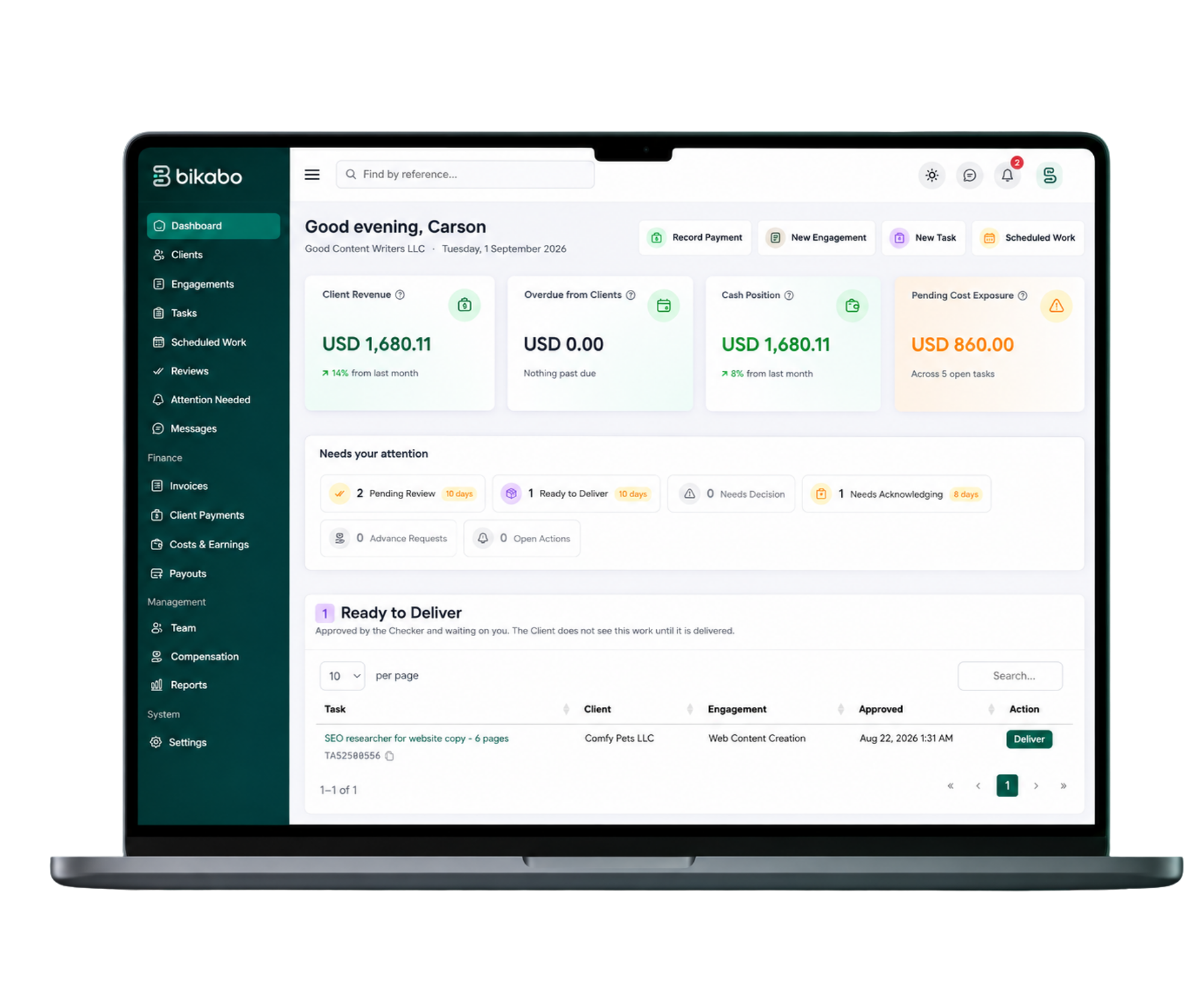
Know What Client Work Is Costing While It’s Still Happening.
Bikabo connects the work your team delivers with what it costs, what clients owe and what your team is owed, so you can see the financial impact of every engagement while there is still time to act.
The Work Moves Faster Than the Numbers.
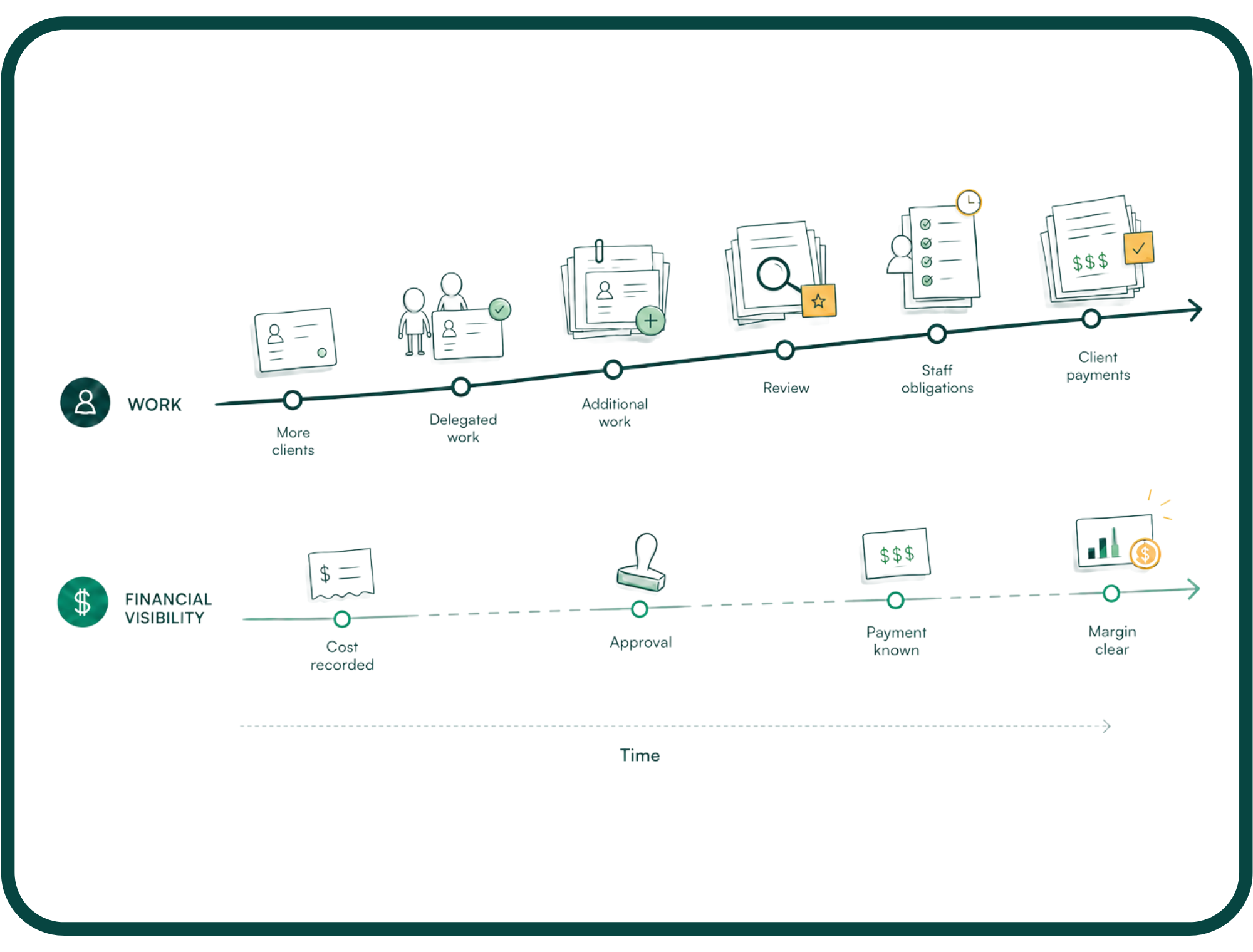
More clients means more delegated work. More delegated work means more tasks, and more work nobody planned for. Reviews turn into revisions. Staff obligations accumulate. Client payments arrive on their own schedule.
By the time all of that has been added up, the engagement is over and the margin is whatever it turned out to be.
Bikabo closes the gap between the work being done and the numbers behind it.
REAL-TIME COST VISIBILITY
See the Cost Forming Before It Becomes a Payout.
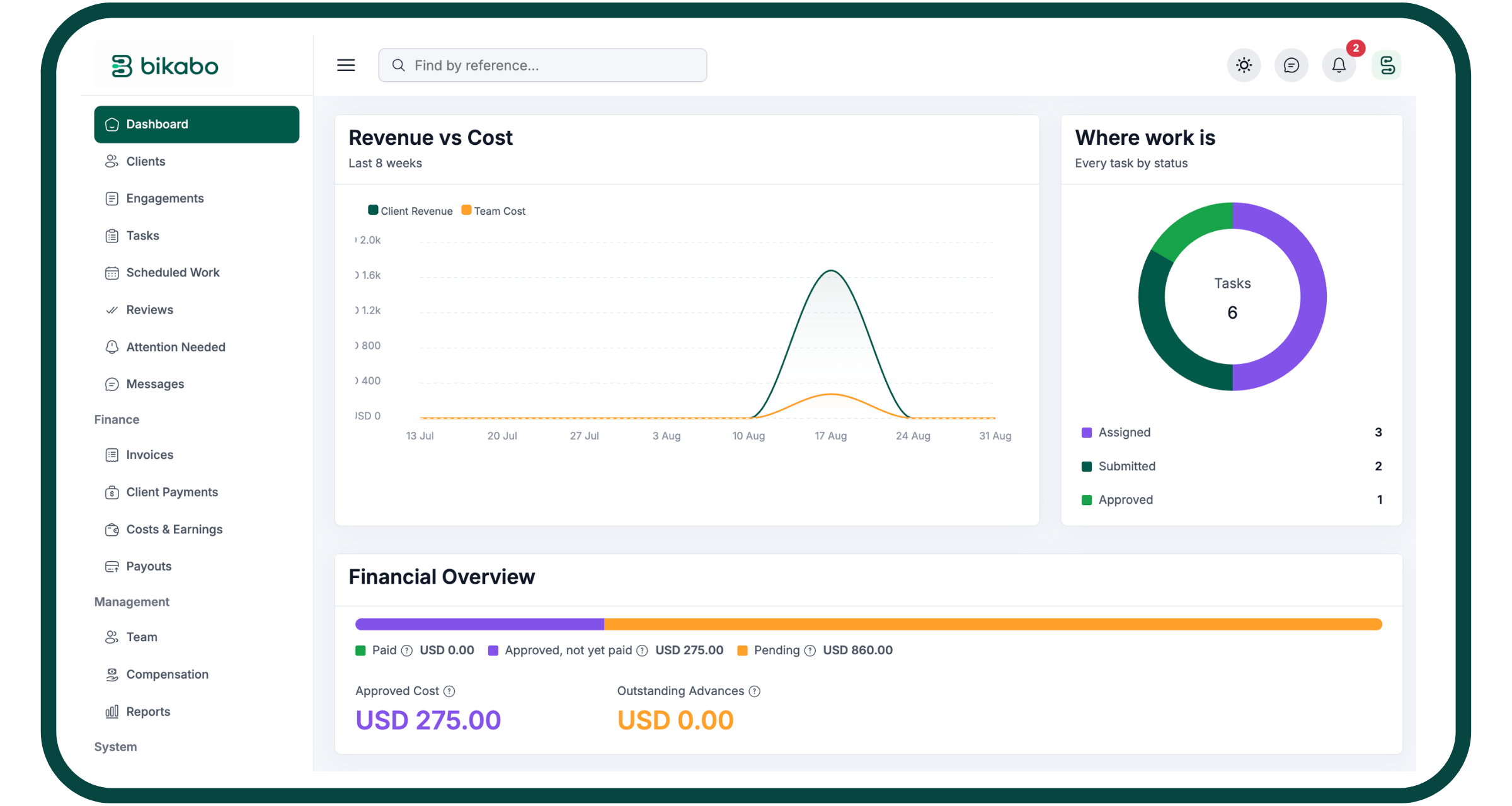
Work that is underway, work that has been approved, and money that has actually gone out are three different facts about the same Engagement. Bikabo keeps them apart, because the first one is the only one you can still do something about.
Pending Cost Exposure
Work that is logged or underway and could become payable, priced at the rates that apply to it.
Not a forecast. The financial consequence of work that has already happened.
Approved Cost
Cost confirmed as payable, because the work passed review and was approved.
What the business genuinely owes its team so far.
Paid Cost
Money that has actually reached the team.
Approving a payout and paying it are two separate steps, recorded separately.
Two Margins, Not One.
The first tells you where an Engagement stands on settled cost. The second tells you where it is heading once the work already in flight is counted.
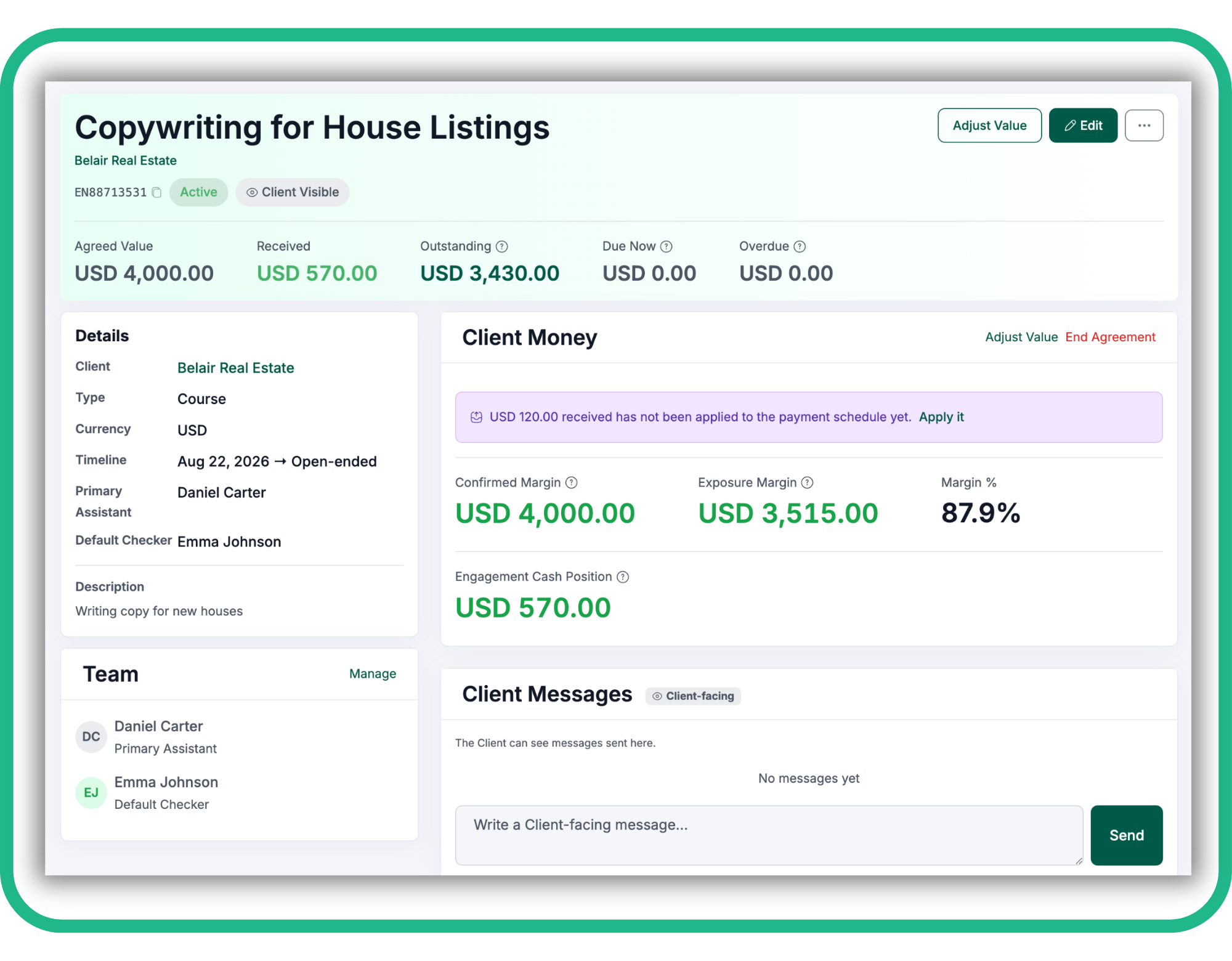
Confirmed Margin
Agreed Client Value - Approved Cost
Exposure Margin
Agreed Client Value - Approved Cost - Pending Cost Exposure
HOW BIKABO WORKS
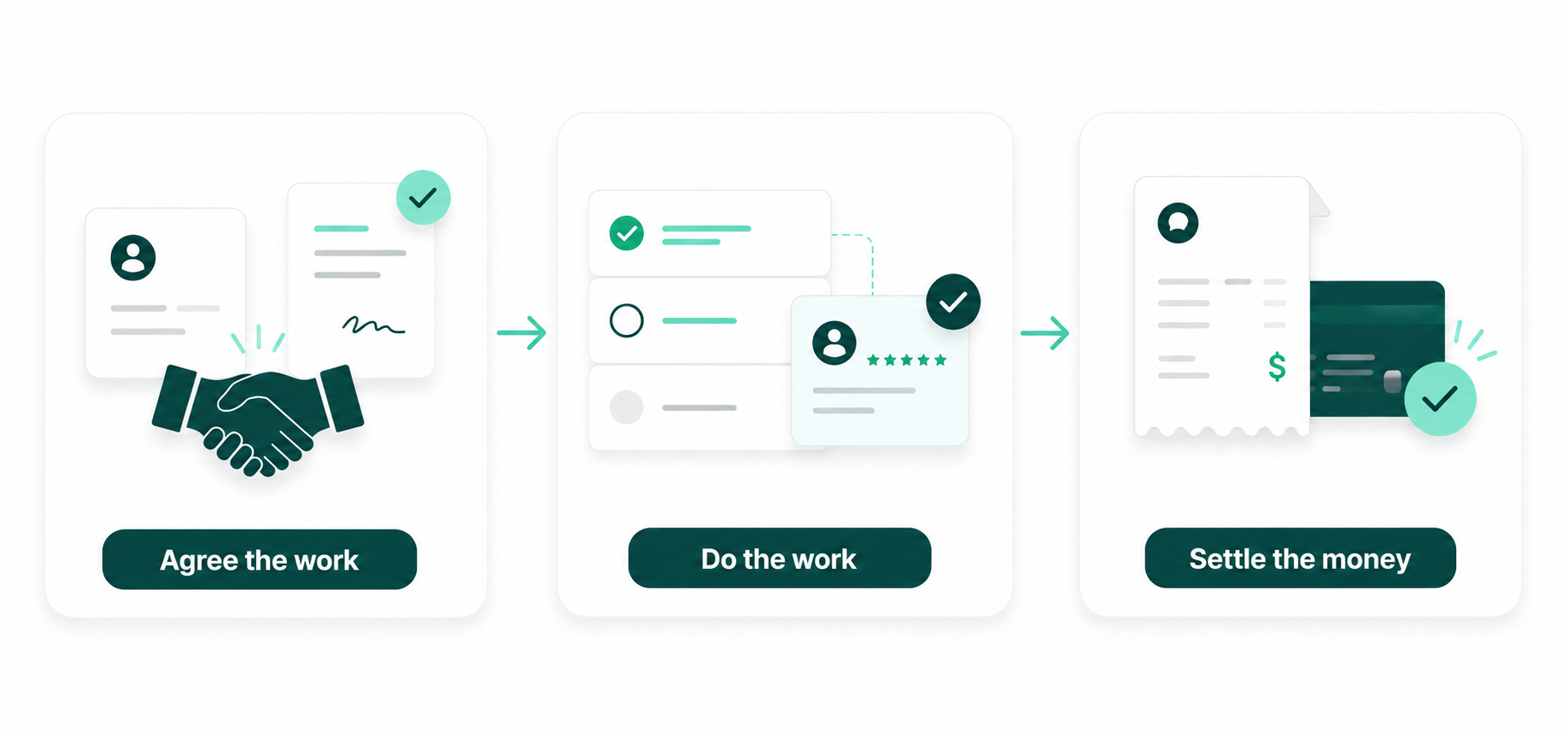
Follow the Work From Agreement to Payment.
One chain, from the client you agreed with to the money that moves at the end of it. Each step produces the next, which is why the numbers do not need a second system to maintain them.
- Client The business you deliver for.
- Engagement The project or retainer you agreed with them.
- Task One deliverable inside that engagement.
- Assignment Who is doing it, and who is checking it.
- Work What was actually done, logged against the task.
- Review Approved, or sent back with a reason.
- Cost Approval is what makes cost confirmed.
- Delivery What the client actually receives.
- Payment Client money in, team money out.
Run the Work From the Same Place You Track the Cost.
Clients, Engagements and Tasks, with the team assigned, the Types of Work you actually do, and a clear line between what was planned and what turned up along the way.
Submission and review, scheduled work, structured blockers, files and conversation, all attached to the work they belong to rather than scattered across tools.
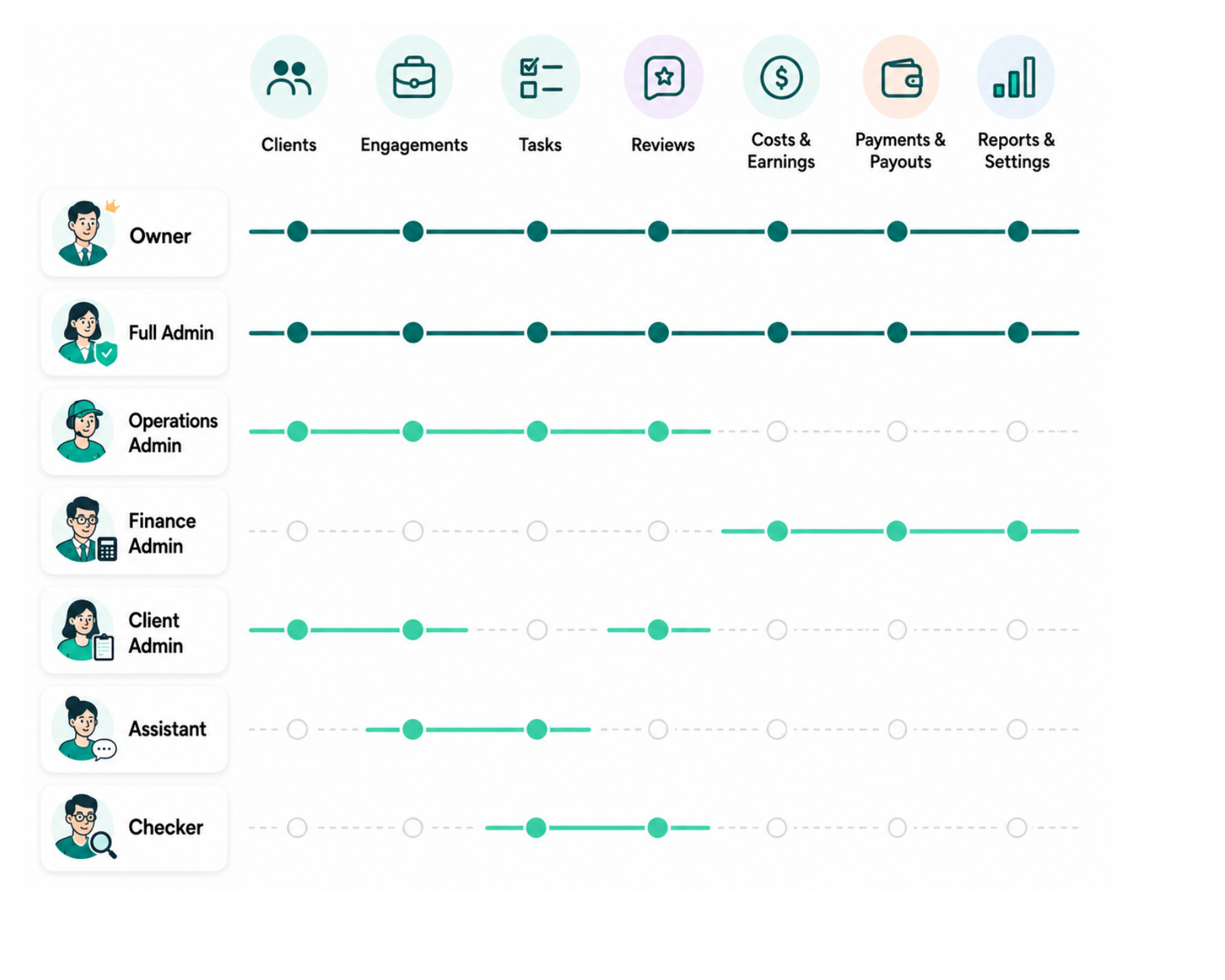
Give People Access to Their Job, Not Your Whole Business.
Owner, Full Admin, Operations Admin, Finance Admin, Client Admin, Assistant and Checker. Each one reaches the part of the business their job needs and stops there.
Keep Clients Informed Without Exposing Your Internal Operation.
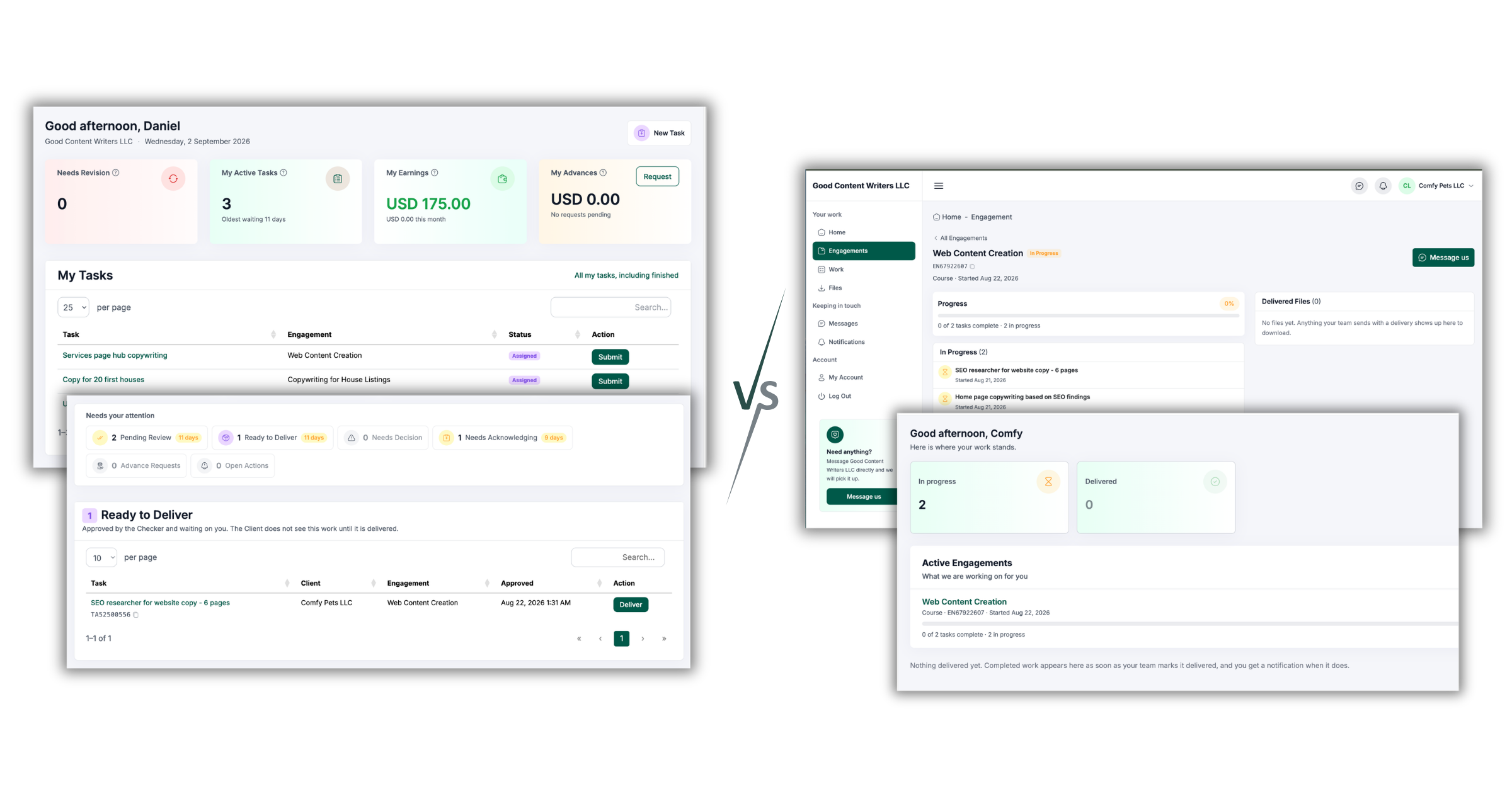
The same work, told two ways. Your team gets the detail they need to deliver it; your client gets the picture they actually asked for.
Your team sees
Internally
- Assignments, submissions, reviews and revisions.
- Who is doing the work and who is checking it.
- Cost, exposure and margin.
- Internal discussion and working notes.
Your client sees
In the Client Portal
- Work that is In Progress, and work that is Completed.
- Files that have been delivered to them.
- Their conversation with your business.
- Scheduled work, and payment information where you permit it.
MONEY AROUND THE WORK
Know What Came In, What Needs to Go Out, and What Remains.
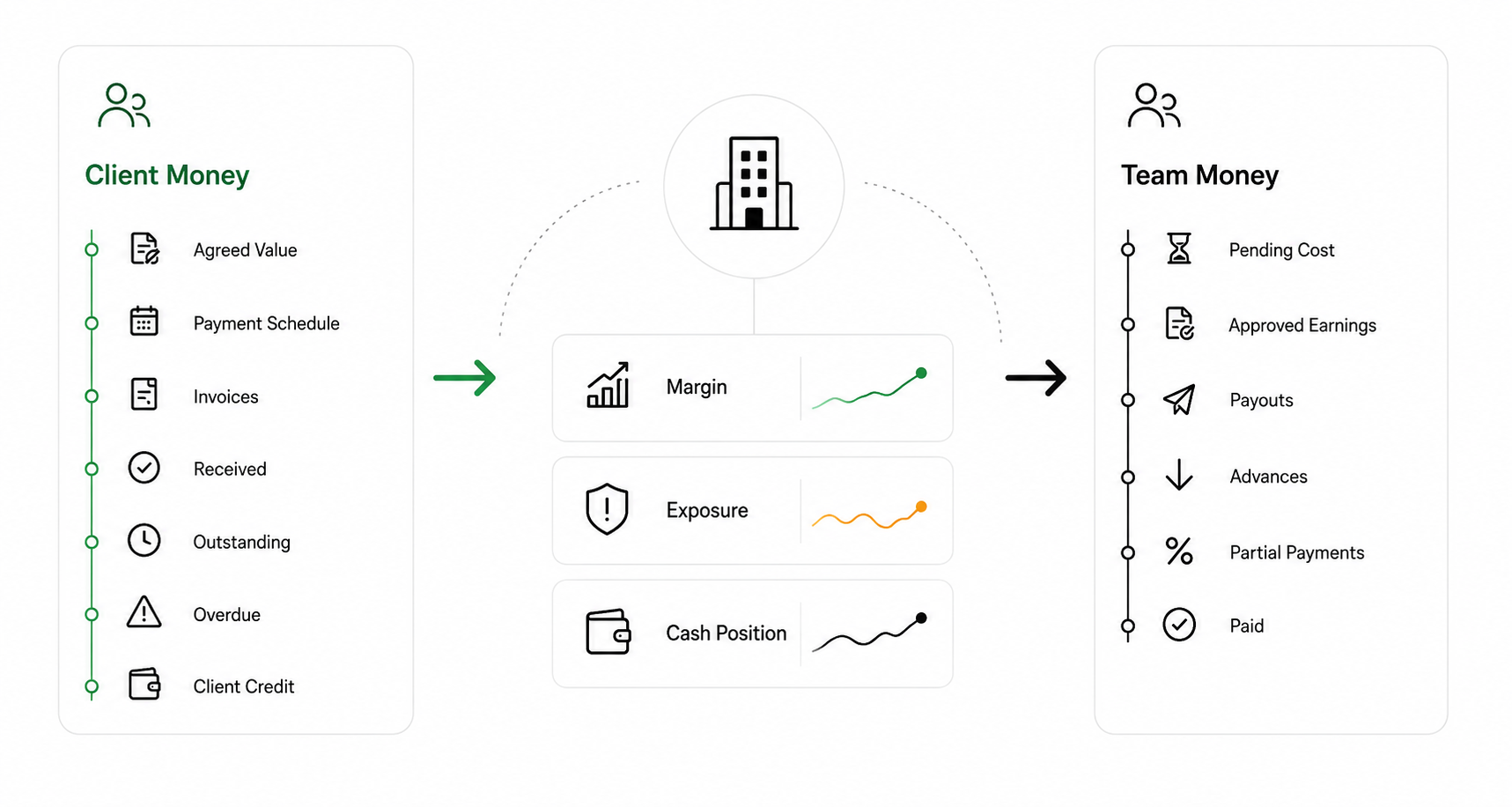
Two flows of money around the same work, kept separate because they answer different questions, and brought together where it matters.
From the client
Agreed value, payment schedule, invoices, what has been received, what is outstanding, what is overdue, and credit where they have overpaid.
To the team
Pending cost, approved earnings, payout periods, advances, partial payments, and what has actually been paid.
In the middle
Margin, exposure and cash position. Profitability and cash are different questions, and Bikabo answers them separately.
Bikabo tracks the operational economics around client work. It is not intended to replace general accounting software.
Built for Businesses That Deliver Work for Clients.
Built to Preserve What Actually Happened.
A system you use to settle arguments about money has to be one nobody can quietly edit.
- Financial history is never silently rewritten. Corrections are new entries linked to what they correct.
- Access is checked on the server on every request, against both the person and the specific record.
- Client communication and internal communication are structurally separate, not separated by convention.
- Sensitive actions are recorded with who did them and when.
Common Questions
Operations and cost-control software for service businesses that deliver client work through a team. It connects the work being done with what it costs, what clients owe and what the team is owed, so the financial picture keeps up with the work.
Businesses that deliver measurable work for clients through other people: agencies, consultancies and professional-services teams that have grown past the owner personally tracking everything, and now have at least one layer of delegation between the owner and the work.
It manages client projects, but that is half of it. A project tool answers what work needs to happen. Bikabo also answers what that work is costing, what the client has paid and what the team is owed, in the same place and from the same records.
Cost comes from the work itself. Each piece of work is assigned, reviewed and approved, and the compensation agreement that applies to it turns that into cost. You see it as three separate figures: pending exposure, approved cost and paid cost.
Yes, both, and it keeps them distinct. On the client side: agreements, payment schedules, invoices, payments received, outstanding and overdue amounts, and credits. On the team side: approved earnings, payout periods, advances, partial payments and what has actually been paid.
Through a dedicated Client Portal, if you invite them. They see their own work as In Progress or Completed, delivered files, their conversation with you and permitted payment information. They never see your internal review workflow, staff costs or margins.
No. Access is split along the lines service teams work on. Assistants and Checkers see their own earnings only. Among Admins, seeing the cost of the work someone runs and seeing the whole payout book are separate permissions, so an operations lead can run delivery without the pay data.
No. Bikabo tracks the operational economics around client work. It is not a general ledger, it does not reconcile against a bank feed, and it does not do tax accounting.